

October 14, 2026
Jamone Lyle’s case shows a system with no guardrails


Written byRoger Hasfal
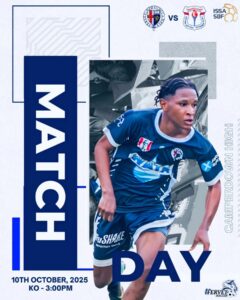
This season, Jamaica College footballer and Reggae Boy Jamone Lyle signed a professional contract with Premier League club Waterhouse. The truth is he may not be the only schoolboy who has done so.
Lyle who has been at JC since he was 12 winning Under 14 and Under 16 titles with them, was still in school, still wearing his school’s colours while desperately wanting to win at Under 19 to complete the trilogy in schoolboy football. He was still scoring goals for them in the Inter-Secondary Schools Sports Association (ISSA) competition. Neither Jamaica College nor ISSA knew he was on a pro contract and by the time anyone officially found out, his school’s season was in jeopardy, and so was his eligibility.
The easy version of this story has a villain, however the true version has a system with no guardrails.
But lets consider who knew what. The club knew, because it drafted the contract, shortly before the start of the school year. The Jamaica Football Federation (JFF) had the means to know, because it holds professional contracts. The parent knew, because she signed her consent.
The school did not know, because no rule requires anyone to tell it. ISSA, which bars professionals from schoolboy competition, did not know either, because it has no direct channel to find out.
ISSA’s own rulebook is clear about why the rule exists. It says schoolboy competition is for student-athletes fully committed to their academic development. ISSA also describes its competitions as serving the holistic development of young people, and it warns that boys in high-profile sports like football are the most likely to fall behind in the classroom.
But a rule meant to protect a child is worth very little if it is enforced only after the damage is done.
What is ironic is the fact that Principal of Jamaica College, Wayne Robinson and President of Waterhouse FC Donovan White are friends. White and Robinson has had agreements re students and are friends on Watsapp dating back over 10 years – I think it wouldn’t have hurt if White had reached out to Robinson and told him of the situation personally.
THE CONTRACT
Now, look at what this boy signed. On a plain reading, he is paid in exchange for not playing football for any other institution, and that includes his own school. He also cannot take part in any other amateur or intramural sport without the club’s permission.
That would cover house athletics at the school he attends every day. A teenager has signed away his school sports life and not one adult in his education was asked.
Here is what that should look like instead going forward:
First, a pipeline. When the JFF registers a professional contract for any player under 19 or enrolled in school, the system should automatically notify ISSA and the school. The data already exists on both sides. ISSA keeps a database of registered students, and the JFF keeps its own registration system. They simply don’t talk to each other.
Second, the right default. The Jamaica Premier League (JPL) already allows schoolboys to play as student players, without a contract. That should be the required route for enrolled students during the school year, unless the school and ISSA have been formally told.
Third, a declaration. At ISSA registration each year, the student and a parent should sign a statement of amateur status, so no family can say they didn’t know the rule existed.
Fourth, protection for minors. No contract for a schoolboy should be allowed to stop him from playing for his school, and every parent asked to sign one should have access to independent advice first.
Now ISSA has punished Lyle as well as Jamaica College because the adults around him failed to do their jobs. Moreover, the least we can do going forward is make sure that the next time a child’s eligibility is at stake, someone is required to ask the questions that should have been asked in the first place.
Imput/Credits: Sky Murray