


October 14, 2026
Jamone Lyle’s case shows a system with no guardrails


Written byRoger Hasfal
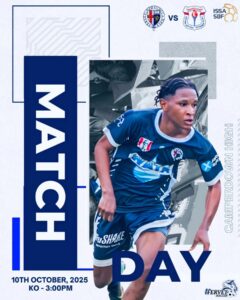
Lyle reportedly signed a professional contract with Jamaica Premier League outfit Waterhouse FC while remaining an active member of Jamaica College’s schoolboy football programme.
The implications have been serious.
According to reports surrounding the matter, neither Jamaica College nor the Inter-Secondary Schools Sports Association (ISSA) was initially aware of the professional arrangement.
By the time the situation emerged, questions had arisen concerning Lyle’s eligibility, while Jamaica College faced disciplinary sanctions.
But this story should never be reduced to the question of whether one schoolboy breached a regulation.
The bigger question is whether the institutions responsible for Jamaican football have established adequate systems to protect young athletes from precisely this kind of situation.
A Dream Years in the Making
Lyle’s association with Jamaica College reportedly began when he was just 12 years old.
Having represented the institution successfully at the Under-14 and Under-16 levels, he was pursuing another important milestone: winning at the Under-19 level and completing a remarkable schoolboy football trilogy.
For any young footballer, such an achievement would carry enormous personal significance.
Yet, while continuing to represent Jamaica College in ISSA competition, Lyle had reportedly entered into a professional contractual arrangement with Waterhouse FC.
That development raises fundamental questions about the communication and coordination between the football club, the player’s representatives, his parent or guardian, the Jamaica Football Federation (JFF), Jamaica College and ISSA.
Who knew about the contract?
When did they know?
Who was responsible for determining whether it affected his eligibility?
And why was the matter apparently not resolved before the young player continued participating in schoolboy competition?
These are not minor administrative questions. They go to the heart of governance and accountability in Jamaican football.
Where Was the Communication?
The original account of this controversy suggests that Waterhouse FC was aware of the contractual arrangement, that parental consent had been obtained and that the JFF had access to relevant player registration information.
It also suggests that Jamaica College and ISSA were not formally notified.
If these circumstances are confirmed, they point to an alarming breakdown in communication among institutions whose decisions can directly affect the educational and sporting futures of young Jamaicans.
It is particularly concerning that school administrators could potentially remain unaware of professional agreements affecting students who continue to represent their institutions.
The relationship between Jamaica College principal Wayne Robinson and Waterhouse FC president Donovan White has also been raised in discussions surrounding the controversy.
However, the existence of any personal or professional relationship should not be confused with a formal obligation to disclose contractual information.
A properly functioning football administration should not depend on friendships, personal telephone calls or informal WhatsApp conversations to communicate matters affecting player eligibility.
There should be established procedures, clear reporting obligations and an accountable chain of communication.
That is what modern sports governance demands.
The Contract: What Exactly Did Lyle Agree To?
Perhaps the most troubling aspect of the controversy concerns the reported conditions attached to the professional agreement.
According to the original account, the contract restricts Lyle from representing another football institution and from participating in certain amateur or intramural sporting activities without the professional club’s approval.
If those provisions are accurately described, they deserve careful legal and regulatory examination.
Does the agreement effectively prevent the student from representing his school?
Could it restrict his participation in other school sporting activities?
Were the implications adequately explained to the player and his parent or guardian?
Did the agreement receive appropriate scrutiny given the player’s age and educational status?
These questions must be answered through examination of the actual contract, the applicable football regulations and the legal protections afforded to minors.
Professional clubs understandably seek to protect their investments in young talent.
But a teenager’s sporting development must never be considered in isolation from his education, welfare and personal growth.
A professional football contract should be a pathway to opportunity, not an instrument that unnecessarily compromises a young person’s educational experience.
ISSA Has Rules — But Are the Systems Adequate?
ISSA has established eligibility regulations intended to preserve the integrity of schoolboy sporting competitions and promote the educational development of student-athletes.
Those objectives are legitimate and important.
However, rules are only as effective as the systems supporting their implementation.
If professional football contracts can be registered without timely notification to the institutions responsible for determining schoolboy eligibility, the possibility of similar controversies remains.
And Lyle may not be the only young footballer whose circumstances warrant closer examination.
That possibility should not be interpreted as evidence of widespread wrongdoing. Rather, it provides a compelling reason for ISSA, the JFF and professional clubs to conduct a coordinated review of registration procedures.
The responsibility for identifying potential eligibility conflicts should not rest exclusively on students and their families.
Administrators, football clubs and regulatory authorities must share responsibility for preventing foreseeable problems.
The Bigger Picture: Jamaica Must Modernise Its Football Governance
Jamaica cannot continue discussing football development solely in terms of producing talented players.
Development also requires strong institutions, transparent regulations, safeguarding procedures and effective communication.
The Jamone Lyle controversy presents an opportunity for meaningful reform.
First, establish an integrated player-registration notification system.
Whenever a professional contract involving a school-enrolled player is registered with the JFF, a secure notification process should alert the relevant school and ISSA, subject to appropriate privacy and safeguarding safeguards.
Second, strengthen the student-player pathway.
Where regulations permit schoolboys to participate in Jamaica Premier League football without entering professional contractual arrangements, that pathway should be clearly explained and properly administered.
Third, introduce annual eligibility declarations.
Students and parents or guardians should receive clear information about ISSA’s amateur-status requirements and formally acknowledge their understanding before registration.
Fourth, protect the rights of minors entering professional football.
Young players and their families should have access to independent advice before signing agreements that may affect educational participation, sporting eligibility or future career opportunities.
Fifth, create a formal dispute-resolution mechanism.
Where eligibility questions arise from administrative failures or conflicting institutional regulations, an independent review process should examine the circumstances before disproportionate consequences fall on young athletes.
These measures would not eliminate every dispute, but they would create a more transparent and accountable environment.
Who Really Pays the Price?
The most important consideration in this controversy is the young footballer himself.
A student who has spent years developing his talent, representing his school and pursuing sporting excellence should not become the principal casualty of weaknesses in football administration.
This does not mean that eligibility regulations should be ignored.
Rules must be respected, and schools must be held accountable when breaches are established through fair procedures.
But accountability must extend beyond the student and his school.
Professional clubs, governing bodies, player representatives and parents all have roles to play.
Where failures occur, the response must be proportionate, transparent and directed at preventing recurrence.
A Defining Moment for Jamaican Football
Jamaica possesses an extraordinary reservoir of football talent.
From schoolboy competitions to the Reggae Boyz, the country’s footballing history demonstrates what young Jamaicans can achieve when opportunity meets preparation.
Yet talent alone cannot sustain a successful football ecosystem.
We need governance structures capable of keeping pace with the increasingly complex relationship between education, youth development and professional sport.
The Jamone Lyle affair should therefore become more than another controversy dominating sporting headlines.
It should serve as a catalyst for institutional reform.
Because when a young footballer signs a professional contract, every relevant institution should understand its responsibilities.
And when those responsibilities are neglected, the consequences should not fall disproportionately on the very young people the system was established to develop.
Jamaican football must decide whether it intends merely to produce professional players or to build a professional system that genuinely protects and develops them.
That is the real challenge emerging from the Jamone Lyle controversy.
And it is a challenge that ISSA, the JFF, professional clubs and educational institutions can no longer afford to overlook.