

November 11, 2026
Swim for the Sanctuary 2026 Draws Record 120 Swimmers in Ocho Rios

Written byRoger Hasfal
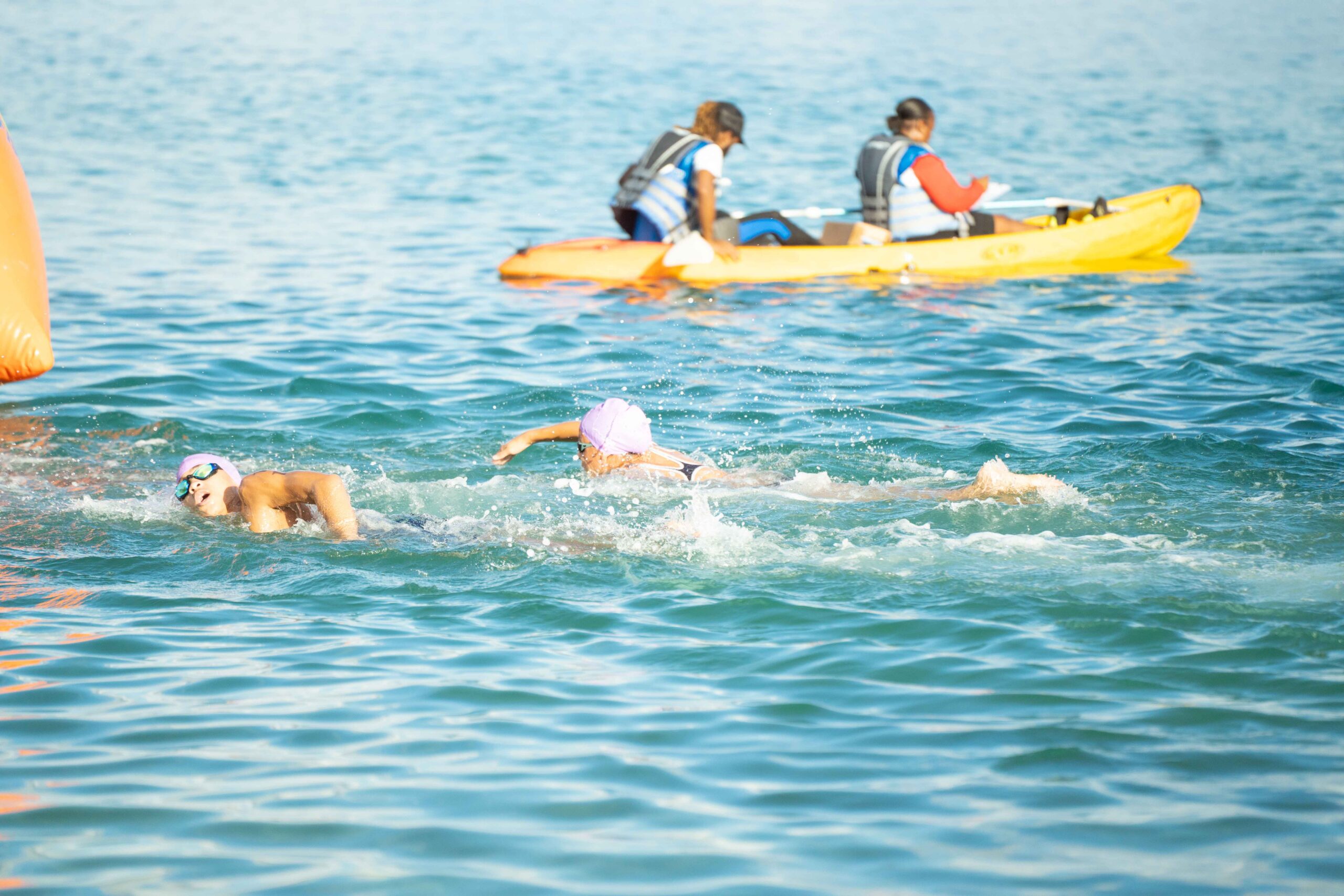
The sixth annual Swim for the Sanctuary made a major splash at Shaw Park Beach/White River House in Ocho Rios, St. Ann, on Saturday, November 7, 2026, attracting its largest participation ever while reinforcing Jamaica’s growing commitment to marine conservation and environmental sustainability.
Organised by the Jamaica Inn Foundation, the increasingly popular open-water swimming competition attracted a record 120 swimmers, surpassing expectations and demonstrating the event’s growing appeal among local and international competitors.
Jamaica Inn Foundation board member Belinda Morrow welcomed the record participation and increasing spectator interest, noting that the competition continues to expand its national and international profile.

The event featured an exciting programme of open-water races over 500 metres, 1 kilometre, 3 kilometres and 5 kilometres, alongside a 4×100-metre relay, paddleboard competitions and a water polo demonstration.
Swimmers representing various age groups and swimming clubs competed in the waters off Jamaica’s north coast, combining sporting excellence with environmental awareness.
Among the outstanding performers was Joel Sinclair of Sharks Swim Club, who successfully defended his men’s 5K title in 1:15.0, improving on his January performance.
Alyssa Jefferson of Y-Speedos captured the female 5K crown in 1:29.05, while Dmitri Ventura of Vikings Swim Club won the men’s 3K in 46.56.
Kai Lawson of Tornadoes successfully defended her female 3K title, recording 51.09.
Special Olympians, Kyle Chin and Kadian Ingleton also won their respective 1K categories.
The 5K event also contributes to Jamaica’s competitive swimming development through its connection with CARIFTA qualification.
Beyond the competition, the event’s greatest significance was its contribution to the White River Fish Sanctuary, a vital marine conservation initiative established in 2017.
The sanctuary protects approximately 150 hectares of marine habitat, providing a safe environment for fish reproduction, coral reef restoration and sustainable marine resource management.
Its conservation strategy centres on three fundamental principles: Protect, Restore and Engage.