


Gov’t called on set up national hurricane resilient housing programme and avoid creating container home communities
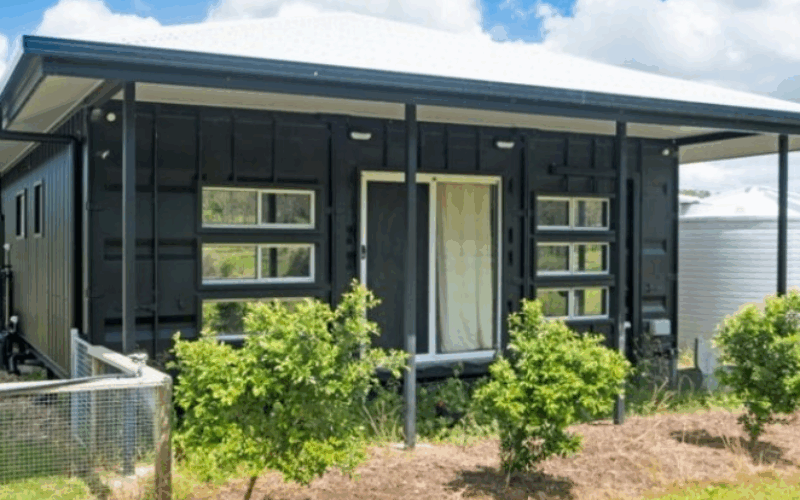
The government is being called on the set up a national hurricane resilient housing programme, and avoid creating container home communities.
The call came from the Incorporated Master Builders Association of Jamaica (IMAJ), Jamaica Institution of Engineers (JIE) and Jamaican Institute of Architects (JIA).
In a joint statement, the groups noted that Hurricane Melissa left thousands of buildings, mostly homes destroyed or damaged.
Noting the government’s plan to acquire about 5 thousand container homes for persons affected by the storm, they pointed out that container shelters cannot replace permanent housing and must not evolve into long-term “container communities.”
Contractors, engineers, and registered architects want government to shift focus towards having hurricane-resilient housing, with temporary containers used only for urgent relief shelter.
They believe these container units must be treated strictly as temporary emergency shelter and used only after passing structural, thermal, chemical, and anchorage testing, by the BSJ and UWI OESH, and certified as safe by ODPEM.
They called for a pivot toward permanent, hurricane-resilient block-and-steel, reinforced concrete, and engineered-timber housing as the foundation of national recovery.
The groups noted only strong, code-compliant structures can break Jamaica’s cycle of vulnerability.
The organizations said they stand ready to guide the government and communities with proven standards, appropriate designs, and the technical expertise required to rebuild stronger, safer, and climate-resilient homes and towns.
They said Hurricane Melissa demonstrated that concrete walls, reinforced roofs, strong fastening systems, and professionally supervised construction significantly outperformed makeshift buildings.
The IMAJ, JIE, and JIA have recommended a national programme centred on affordable block-and-steel and reinforced-concrete starter homes, roofing grants, relocation from high-risk zones, and paho-standard engineered-timber units all designed to withstand category-5 winds.
They noted that local engineers, architects, and contractors understand the island’s terrain, construction ecosystem, and climate risks.
They said professionals work daily with local soils, materials, labour systems, and coastal and hillside conditions knowledge, essential for safe and durable rebuilding.
The groups said the national recovery must rely on professional guidance to ensure solutions are safe, culturally appropriate, and properly adapted to Jamaica’s varied environment.
Additionally, professional inspection and enforcement of the building code, must be treated as national priorities.
0 Comments