


BOJ’s policy rate remains unchanged
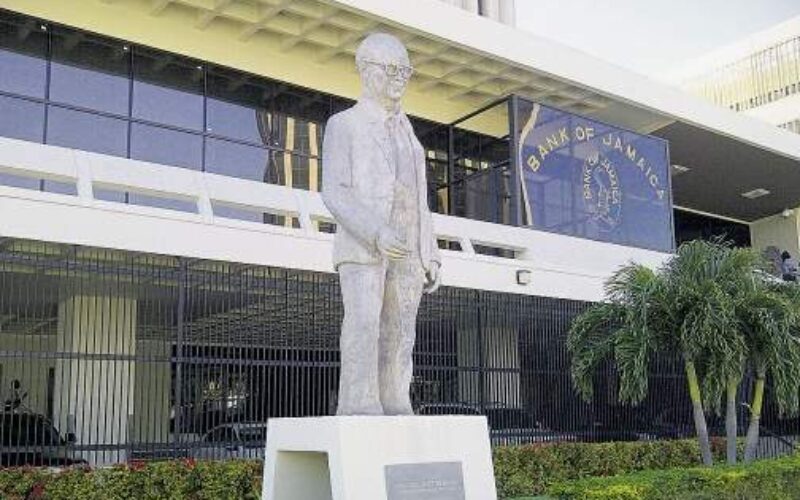
Despite the expected economic shocks due to the passage of Hurricane Melissa, the Bank of Jamaica, BOJ has decided to hold its policy rate unchanged at 5.75 percent per annum.
The bank made the disclosure during a press release yesterday following its Monetary Policy Committee M-P-C meetings on November 20 and 21, 2025.
Clement Reid reports
*************************
According to the BOJ, the committee deliberated on its monetary policy stance in the context of the post Hurricane Melissa environment and expressed its concern regarding the devastation caused by the Hurricane and the considerable hardship and dislocation being suffered by many Jamaicans.
The MPC determined that preserving a stable macroeconomic environment is essential to the recovery effort at the individual, household and national levels.
In this regard, the BOJ said it remains committed to ensuring that the inflationary effects of the hurricane are managed in order to limit the hardships on vulnerable groups and to facilitate the conditions necessary for long-term economic recovery.
The MPC noted that the decision to maintain the policy rate was based on five factors.
The first factor is the annual headline inflation which will rise sharply from 2.9 per cent, it’s outturn at October 2025 and will exceed the bank’s inflation target of 4 percent to 6 per cent over the near term.
The committee said the rise in inflation reflects the impact of the hurricane on the major food producing parishes and the second round impact on the prices of other selected goods and services (such as routine household maintenance, transport, energy and personal care items).
The second factor is core inflation which excludes the prices of agricultural food products and fuel from the Consumer Price Index, CPI which will also rise, breaching the target range in mid-2026.
The MPC said the third factor is the signalling by the government of a temporary suspension of the fiscal rules to support the relief and recovery effort, which will facilitate increased spending in the economy.
The fourth factor is that the risks to the inflation outlook are skewed to the upside.
The MPC said this means higher inflation could result from higher-than-expected domestic demand to support reconstruction efforts, as well as higher-than-anticipated inflation expectations.
The committee noted that there could also be long-term damage in specific industries which could slow the improvement in the production and availability of supplies.
On the downside, inflation could be lower due to a slower-than anticipated recovery in domestic demand associated with income loss.
And the committee said the fifth factor is that without its policy actions, headline inflation will remain elevated for an extended period of time.
The Central Bank noted that holding the policy rate unchanged, complemented by the proactive measures to ensure stability in the Foreign Exchange Market, will enable inflation to return to the target range by early 2027.
0 Comments