


Agriculture Ministry monitoring egg supply after Hurricane Melissa disruptions
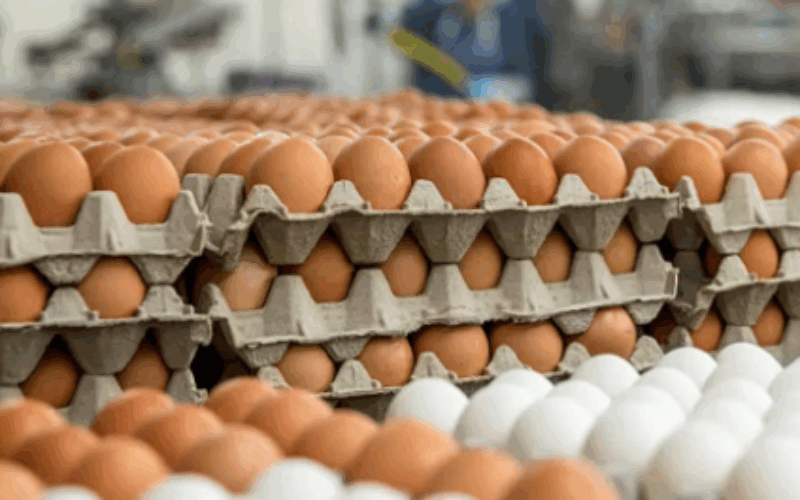
The Ministry of Agriculture says it continues to closely monitor egg supply and overall market conditions following disruptions caused by Hurricane Melissa.
The statement follows recent concerns raised by the Jamaica Egg Farmers Association (JEFA) about the continued importation of eggs, which it says is impacting local farmers.
In a press release yesterday the Ministry said it must be emphasized that the livelihood and economic viability of the island’s egg farmers are paramount in its consideration regarding egg importation and as such this measure is monitored continuously to ensure that local farmers and consumers are not placed at a disadvantage within the market.
It said at the time Hurricane Melissa affected the sector, the egg industry was still recovering from the impact of Hurricane Beryl in 2024.
Following Beryl, JEFA indicated that production was expected to normalize within approximately six months.
However, the Ministry said supply did not return to pre-Hurricane Beryl levels, resulting in some hotels being unable to access their regular allocations and supermarkets implementing purchase limits.
The Ministry said Hurricane Melissa in 2025 compounded these challenges significantly with reported losses of approximately 400,000 laying hens substantially reducing national egg output.
The Ministry’s post-Melissa market assessments indicated that domestic egg supply would decline by approximately 40% with an estimated recovery period of eight to twelve months.
According to the Ministry, production data confirm that output for the first half of 2026 is projected to be 30-40% below the last five years’ average production levels.
It explained that although production continues to improve month by month, projections indicate that monthly output is not expected to surpass 2025 levels until August 2026, when clearer year-over-year gains are anticipated.
The Ministry said it is important to note that in the aftermath of Hurricane Melissa, JEFA revised its recommended prices from $550.00 to $670.00 per dozen for unbranded eggs and from $580.00 to $700.00 per dozen for branded eggs, representing increases of approximately 21.8% and 20.7% respectively.
The Ministry said the association reportedly attributed these adjustments to reduced production levels, as well as increased logistics and refrigeration costs.
In response to JEFA and other stakeholders to address the supply gap, the Ministry approved limited egg imports as a temporary measure to ease supply constraints until local production normalises and to provide relief to consumers in relation to prices.
To this end a waiver was sought on import duty, additional stamp duty and GCT for imported eggs.
This request was approved by the Ministry of Finance and was scheduled to come to an end on February 28, 2026.
However, based on current production data and recovery projections an extension of the waiver is being sought until the end of May 2026 in the first instance to ensure full market recovery and price stability.
It noted that this targeted and time-bound intervention has helped and will continue to moderate prices while domestic production capacity is being restored.
The Ministry said it will continue to monitor supply levels and market conditions to safeguard stability as the sector advances toward full recovery.
0 Comments