


Research shows human-induced Climate Change made Hurricane Melissa more destructive
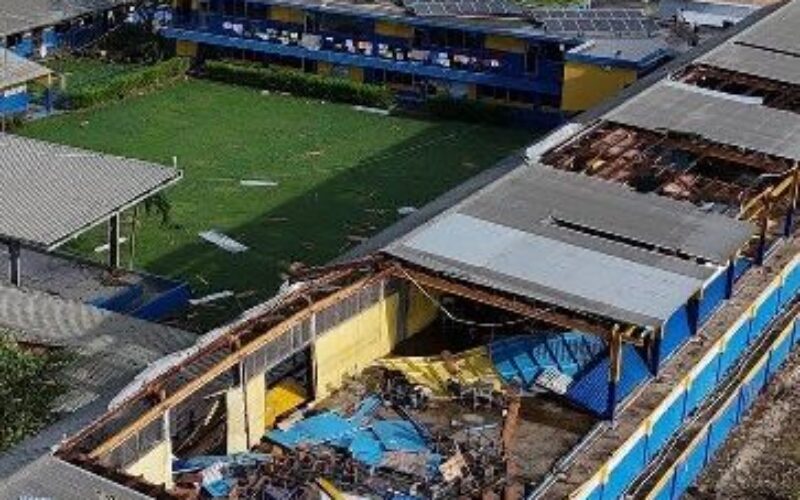
Research has shown that human-induced climate change made Hurricane Melissa more intense and destructive.
The finding was detailed in a release from the university of the West Indies, UWI.
The university said, some of its scientists contributed to a new international rapid analysis which confirmed the role of human-induced climate change to the hurricane’s intensity.
The UWI said the study incorporating data from Jamaica and eastern Cuba, was conducted by the World Weather Attribution, an international collaboration that studies how climate change affects extreme weather.
It said the data shows that the atmospheric and oceanic conditions, leading to the storm were made about 6 times more likely by climate change.
Hurricane Melissa, struck the Caribbean last week Tuesday October 28, crossing Jamaica, Cuba, the Dominican Republic and Haiti.
The storm’s winds, increased from 68 to 140 miles per hour within one day — a process of rapid intensification; that scientists say is becoming more frequent as the planet warms.
To date, Melissa left at least 75 people dead, displaced thousands and caused economic losses, amounting to billions of us dollars across the region.
The post-storm rapid analysis, was conducted by 20 researchers from universities and met agencies, across Jamaica, Cuba, Ireland, the Netherlands, the United Kingdom, the United States, and Austria.
Researchers, used three scientific approaches to examine rainfall, wind speeds, and the environmental conditions that allowed Hurricane Melissa to intensify so quickly.
Using the imperial college storm model which estimates the role of climate change in tropical cyclones, the study found that climate change increased the storm’s maximum wind speeds by 7% and extreme rainfall by 16%.
Historical observations also show that the maximum rainfall over five days in Jamaica and eastern Cuba is now between 20 and 50% higher than in pre-industrial times.
Contributing author from the UWI Mona Campus, Dr Jayaka Campbell, described the findings as a warning sign for the region and called for Melissa to be a turning point.
He said when a storm can explosively intensify from 70 to 185 miles per hour, in less than three days, over ocean waters that are 1.5 degrees celcius warmer than normal, this is a dangerous new reality, of the warming of the world.
Noting that Melissa destroyed livelihoods, infrastructure, and lives in a matter of hours, Dr. Campbell said the conditions that created this monster storm have been building for decades.
For his part Friederike Otto, of the Centre for Environmental Policy, Imperial College said what was seen with Hurricane Melissa, and other recent monster storms is that they are becoming so intense, that they will soon push millions of people, beyond the limits of adaptation.
He said unless people stop burning coal, oil and gas more and more countries will reach these limits.
The world weather attribution’s, rapid analysis concludes that without significant reductions in fossil fuel use, more intense and destructive storms like Melissa, will become increasingly common.
The findings also highlight , the urgency of investing in adaptation strategies to protect vulnerable communities across the Caribbean.
The full report, titled ‘Climate Change-enhanced Intensity of Hurricane Melissa: Testing the limits of adaptation in Jamaica and Eastern Cuba’, is publicly available.
0 Comments